How to Detect and Humanize AI Content for Google AdSense Approval
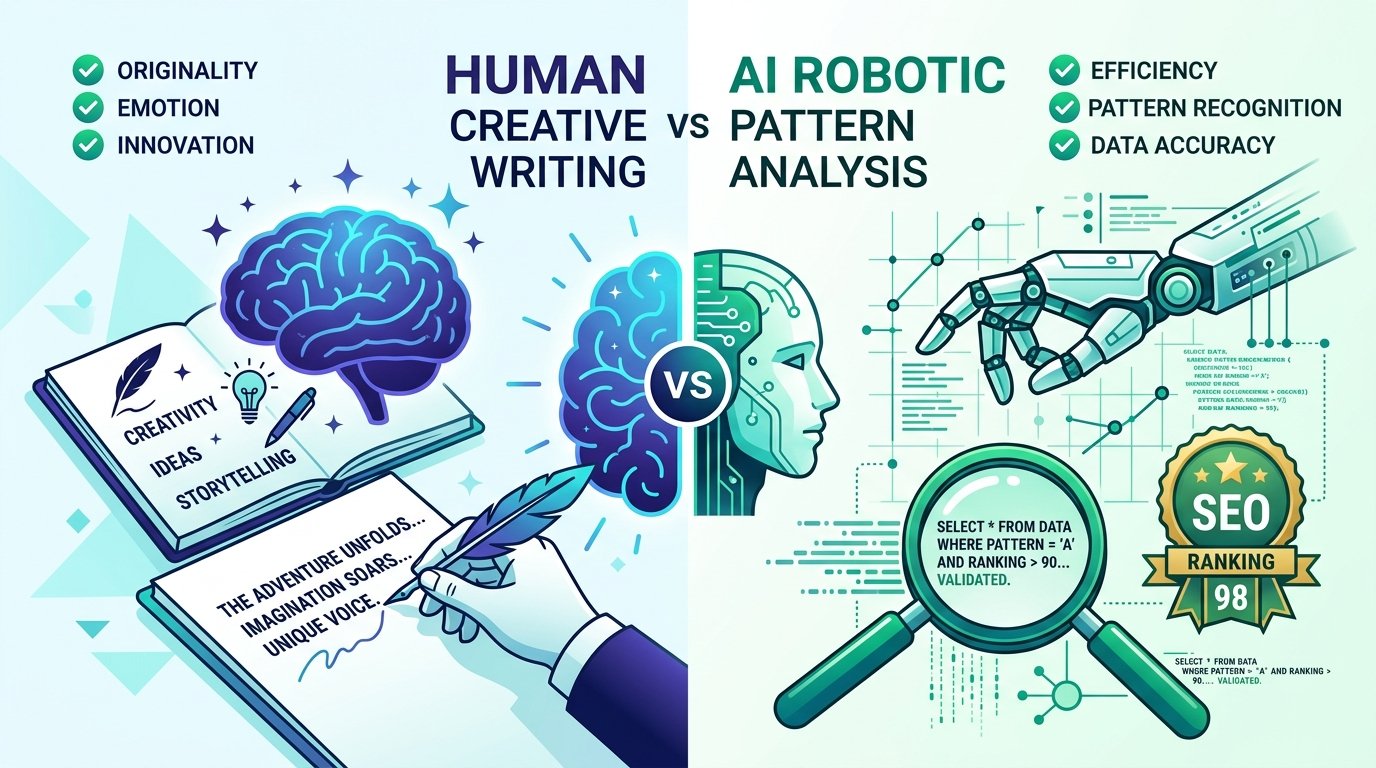
Generative AI tools like ChatGPT, Claude, and Gemini have revolutionized content drafting. However, thousands of publishers who rely exclusively on raw AI text are receiving swift rejections from Google AdSense citing "Low Value Content" or watching their organic search impressions collapse after Google Core Algorithm updates.
Google does not ban AI-assisted writing outright. What Google penalizes is unhelpful, synthetic, generic content that lacks real human experience, original perspective, and emotional authenticity. In this guide, we explain how AI detectors work and how to humanize your drafts before publication.
How AI Content Detection Actually Works
AI detectors do not rely on magic. They evaluate mathematical and statistical properties of language that distinguish large language model outputs from human expression:
- Perplexity: A measure of word predictability. Large language models are trained to output the statistically most probable next word. As a result, AI-generated text has very low perplexity. Human writers, by contrast, frequently make creative, unexpected word choices that elevate perplexity.
- Burstiness: The variation in sentence structure and length. A human writer naturally writes a punchy three-word sentence. Then they follow it with a longer, nuanced clause that introduces a personal anecdote. AI models, on the other hand, produce monotonous sentences of nearly identical length and syntactic complexity throughout an entire post.
- Hedging & Passive Voice: AI models are conditioned to avoid taking firm stances. They overuse phrases like "It is important to note that", "One might consider", and "In the realm of".
The 5 Telltale Robotic Phrases You Must Eliminate
If your draft contains any of the following cliché transitional phrases, search engine quality evaluators will immediately recognize synthetic generation:
- "In today's fast-paced digital world..." → Delete immediately. Start with a direct fact or problem statement.
- "Delve into the nuances of..." → Replace with "explore", "examine", or "test".
- "Furthermore / Moreover / In conclusion..." at the start of every single paragraph → Use conversational transitions or omit entirely.
- "It is crucial to remember that..." → State your point directly without filler preamble.
- "A tapestry of opportunities..." → Use concrete, real-world examples instead of flowery metaphors.
Four Techniques to Humanize AI-Assisted Writing
1. Inject First-Person Experience (Google EEAT)
Google's search guidelines prioritize Experience. AI has never built a WordPress site, applied for an AdSense account, or tested a physical product. Add personal observations: "When I first tested this plugin on my staging server in March 2026, the page load time dropped by 400 milliseconds." That single sentence cannot be faked by generic AI prompts.
2. Deliberately Vary Sentence Length
Break up monotony. Pair a 25-word explanatory sentence with a four-word punchy statement. Read your article out loud: if every sentence takes the exact same breath to speak, rewrite half of them.
3. Take Definite Stances
Humans have opinions; unedited AI sits on the fence. Don't say "Both options have their own merits." Say "Option A is significantly faster and cheaper for beginners, whereas Option B is only worth the cost for enterprise teams."
4. Audit with ContentScope's AI Content Detector
Before publishing, paste your draft into ContentScope. The tool calculates your exact % AI vs % Human Voice Score, highlights robotic sentences in red and amber, and suggests natural conversational rewrites.
Conclusion
AI is a brilliant research assistant and outliner, but it makes a mediocre final editor. By combining AI drafting with diligent human editing and ContentScope verification, you guarantee that your articles satisfy Google AdSense review standards and rank sustainably.
Ready to check your own content?
Get a free AI-powered SEO analysis with actionable fix suggestions.
Try the Free SEO Checker